In beach tennis a pair defends as a single unit. Holes in the defense come not from slow feet but from two players moving independently.
The rope rule
Imagine a rope half a court long stretched between you and your partner:
- Your partner moves left — you shift left.
- Your partner closes in on the net — you move up behind them.
- Never move in opposite directions at the same time.
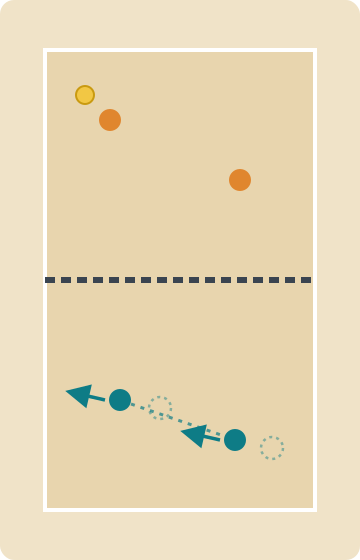
Diagram: the ball is in the opponents’ left corner — both players (teal) shift left in sync; the dashed marks show the previous positions and the “rope” between partners.
Shifting with the ball
The center of your pair always shifts toward the ball:
- Ball in the opponents’ left corner — the pair slides left, leaving open only the far (and slowest to hit) diagonal.
- Ball in the middle — the pair squeezes toward the center.
Who takes the middle
- A ball down the middle is taken by the player who gets it on the forehand.
- Agree in advance and confirm out loud.